

Modern living rooms are built on calm: clean lines, open floor space, and furniture that earns its spot. So when a bulky, reclining piece of wellness equipment enters the picture, placement matters more than almost any other decision. The right spot makes it feel like a custom-designed relaxation corner. The wrong one makes it feel like a gadget parked in the middle of your home.
This guide covers how to measure, where to position it, and how to blend it with your décor, with a few tips that suit Indian homes, climates, and apartment layouts.
Start with Space and Measurements
A full body massage chair typically measures 140-160 cm in length and 75-90 cm in width when upright. When reclined, many models stretch to 170-190 cm. Zero-wall designs glide forward as they recline and need just 5-10 cm behind them, while traditional models may need 30-60 cm.
Plan for these clearances:
- Behind: 5-60 cm, depending on the recline mechanism
- Sides: at least 30 cm for easy entry and exit
- In front: 60-90 cm so the footrest can extend freely
Use painter’s tape to mark the fully reclined footprint on your floor. Live with the outline for a day or two, and you’ll quickly see whether the spot works.
Best Spots in a Modern Living Room
1. Near a Window or Balcony Door
Natural light makes a session feel more restful, and a view of the sky or greenery adds to the effect. Angle the chair slightly toward the room so it doesn’t look pushed against a wall. A tall indoor plant, such as a snake plant or areca palm, beside it softens the look.
In sunny regions, intense afternoon light can fade upholstery. Sheer curtains or blinds let in brightness without the damage.
2. In Front of a Feature Wall
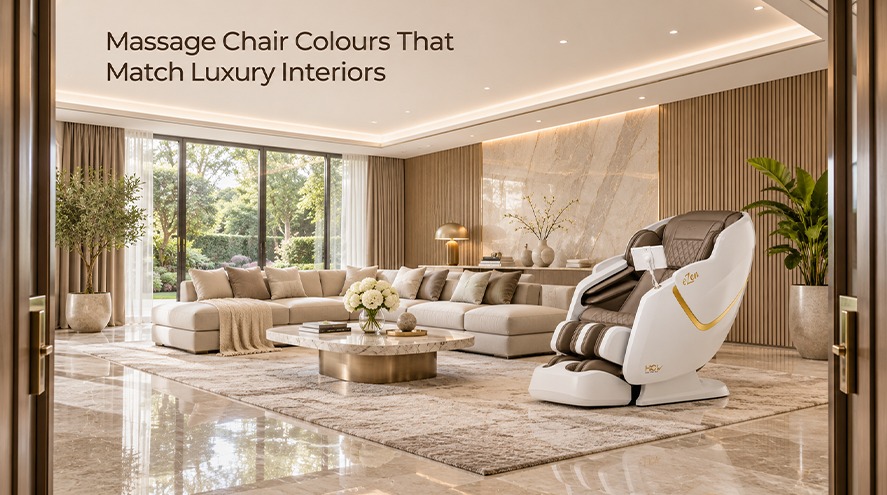
If you have textured paint, wood paneling, or a gallery wall, placing the chair in front of it creates a layered, designer feel. Pair a charcoal or black chair with warm wood tones, or a cream chair with deep green or navy walls.
3. At the Edge of Your Seating Zone
Place the chair at the perimeter of your sofa arrangement, angled toward the TV or room center. It stays part of the social space without crowding the sofa, and you can watch a show during a session. Keep it away from the main walking path.
4. A Dedicated Relaxation Nook
Open-plan homes and apartments with an unused corner are perfect for this. Add a small side table, a warm-toned floor lamp, and an area rug to define the zone. It reads as an intentional wellness corner rather than leftover space.
Spots to Avoid
- Doorways and walkways: a reclined chair and footrest are a tripping hazard.
- Next to ACs, coolers, or heaters: direct drafts and heat harm upholstery and add discomfort.
- Damp areas: moisture near bathrooms or open, rain-exposed balconies can damage electronics and fabric.
- Unprotected delicate flooring: These chairs often weigh 70-100 kg or more and can scratch marble, tile, or wood.
Protect Your Floors
Italian marble, vitrified tile, and polished wood are common in Indian homes, and all of them scratch or show scuffs. Place a rubber mat or low-pile rug under the chair to absorb vibration, stop sliding, and shield the surface.
Match the Chair to Your Décor
A modern living room relies on restraint, so choose carefully:
- Color: black, grey, cream, and tan blend with most contemporary palettes. Bolder shades work if repeated elsewhere in cushions or art.
- Material: Premium synthetic leather or soft fabric pairs well with modern sofas.
- Shape: sleek, curved shells with hidden mechanics look more like designer lounge chairs than equipment.
Echo the chair’s color in a throw pillow, lamp base, or vase to tie it into the room.
Regional Practicalities Worth Considering
Heat and ventilation: in hot regions where summers regularly cross 40°C, avoid stuffy corners with poor airflow. A spot with a ceiling fan or AC nearby (but not directly blowing on the chair) keeps sessions comfortable and protects the electronics.
Dust: in dry, dusty areas, particularly in desert-adjacent cities, fine dust settles quickly. A breathable cover when the chair isn’t in use helps, along with regular wiping of the upholstery.
Voltage and power access: Indian homes can see voltage fluctuations, so connect the chair to a quality stabilizer or surge protector. Keep it close to a socket so cables don’t run across the room, and use cable covers for a tidy look.
Delivery access: measure doorways, staircases, and lifts before ordering. In apartments, narrow entries and compact lifts can make delivery difficult, and some chairs need to be tilted to fit.
Monsoon humidity: during the rainy season, indoor humidity rises. Keep the chair away from damp walls and consider a dehumidifier in very humid rooms.
Think About Daily Use
Place the chair where you’ll genuinely use it. If it’s tucked into a rarely visited room, it becomes expensive décor. A location visible from your main living area serves as a gentle nudge to pause and recharge after a long day. The best spot is usually quiet, comfortable, and a few steps from where you already unwind.
Final Thoughts
The ideal placement balances three things: enough clearance for recline, a calm, well-lit setting away from heat and moisture, and visual harmony with your décor. Measure first, preview the footprint with tape, and pick a corner, feature wall, or nook that fits your lifestyle.
Thoughtfully placed, a massage chair for home is more than a wellness appliance. It becomes a design statement that makes your living room feel more relaxing and complete.